- Team & Management
- Incentives & Compensation
- ·
-
Mar 23, 2026
KPI vs SOP: Why Paying for One When You Mean the Other Stalls Your Team
Every performance sheet scores full marks, yet revenue hasn't moved in three years—not because the team lacks drive, but because the sheet measures process compliance and calls it results, so the scheme rewards obedience. This piece nails down the KPI vs SOP difference: SOPs are the threshold and earn no bonus, KPIs carry the money—with a worked bakery example and a 3-step fix.

Spark Liang
Managing Director, MMC Financial
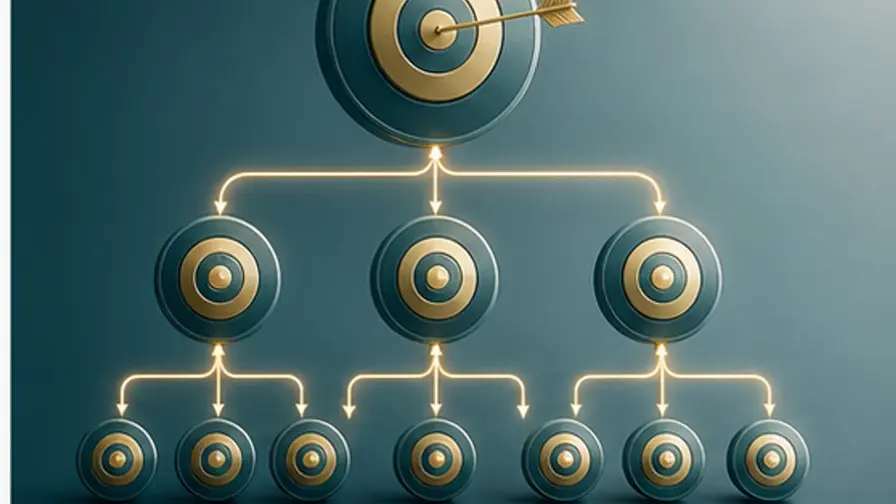
KPI vs SOP: One Manages Results, the Other Manages Process
KPI vs SOP comes down to one line: an SOP is a written process with a fixed, absolute standard — follow it and you’re right; a KPI is a numeric result with a floating, relative standard — it only counts when you beat last time. The KPI vs SOP difference that burns real money is in the bonus: pay on SOP compliance and you buy obedience, never improvement.
You may know this picture: Mr. Tan, who runs a bakery chain doing RM12 million a year, flips through his staff “performance sheets” — clocked in, followed the recipe, cleaned the station — a dozen bakers, everyone at full marks. Yet revenue has been flat for three years, the reject rate is stuck at 8%, and not one new product has taken off. That sheet isn’t a KPI; it’s an SOP in a KPI costume. Here’s how to pull the two apart.
Staff Not Pushing? Check Whether the KPIs Are Tied to Money
Leave your WhatsApp and email and we'll take you straight to the pack.
The Common Mistake: Thinking a Spreadsheet Equals a KPI
Plenty of owners hire a consultant, buy a template, produce a dense-looking sheet, and assume they now “have KPIs.” In reality, most of what they typed in is an SOP, not a KPI.
This isn’t the owner’s fault. The two terms get used interchangeably everywhere — even a lot of HR people can’t draw the line cleanly. But the confusion burns real money, because the blame lands on “unmotivated staff” when the actual leak is in the mechanism itself.
KPIs and SOPs are two completely different instruments that manage two different things:
| SOP (Standard Operating Procedure) | KPI (Key Performance Indicator) | |
|---|---|---|
| Nature | Verbal / written | Numeric |
| Manages | The process / how it’s done | The result / how much got done |
| Standard | Fixed, absolute (follow it, you’re right) | Floating, relative (beat last time) |
| Answers | ”How is this done correctly?" | "How well was it done, and what’s it worth?” |
A baker makes it obvious:
- The SOP is: “Water at 38°C, knead for 12 minutes, prove for 90 minutes, bake at 180°C for 22 minutes.” That’s the process — follow it and you’re right, the same way ten thousand times.
- The KPI is: “How many loaves this month, average time per loaf, reject rate, cost per unit, repeat-purchase rate.” That’s the result — a set of numbers that can get better month over month.
SOPs guarantee “no mistakes.” KPIs drive “better and better.” You need both. But you must never pay people on an SOP as if it were a KPI.
Side note: to check whether your own bonus scheme is buying obedience or results, start with the free AI profit diagnosis — a real consultant, 30-45 minutes, no hard selling.
What Paying on an SOP Actually Burns
This is the most hidden — and most expensive — leak of the lot. Let’s run the numbers.
Mr. Tan’s bonus rule works like this: any baker with a full score (every SOP box ticked) gets an extra RM800 at month-end. Ten bakers, RM8,000 a month, RM96,000 a year.
It sounds like he’s “motivating the team.” But look closely at what he’s actually buying:
- He bought “staff following the process” — but that’s the baseline job. Anyone who doesn’t follow it should be managed out, not paid extra.
- He bought “everyone scoring full marks” — because an SOP is fixed and absolute. Do it, and you’re at 100%. There’s no “better than last month” to chase.
- He did not buy: higher output, faster pace, lower reject rate, lower cost, or new products that actually sell.
In other words, he spends RM96,000 a year rewarding “maintain the status quo and don’t break anything.” Staff are smart — they give you whatever the scheme measures. When the sheet only asks “did you follow the steps,” hitting the bar without a single error already earns full marks. So why would anyone push to drop the reject rate from 8% to 5%?
Now swap in a real KPI mechanism — numeric, floating, relative:
Old scheme (SOP dressed as KPI):
All process boxes ticked → +RM800 (fixed)
Result: everyone full marks, reject rate stuck at 8% for three years

New scheme (real KPI):
Reject rate baseline 8% → RM300 for every 1% reduction
Output baseline 200/day → RM200 for every extra 20 loaves
New-product baseline 0/month → RM150 for every 100 sold

One baker, this month: reject rate down to 5% (−3%) → RM900
                       output at 240/day (+40)      → RM400
                       new product sold 300 units    → RM450
                       bonus this month              → RM1,750
Where’s the difference? Under the old scheme, the baker earns RM800 for being “obedient.” Under the new one, the baker earns RM1,750 because they genuinely made the company more money — the material saved by a 3% lower reject rate, plus the sales from the extra capacity, comfortably exceed that bonus. That’s healthy profit-sharing: the employee earns more only because the company earned more first.
Do This Week: Three Steps to Split SOPs from KPIs
No overhaul required. Start with these three.
Hold onto one line before you start
An SOP is the threshold — the basic requirement for showing up to work. Fail it, and you shouldn’t be employed. A KPI is the track — how much better you are than your peers and your past self. Thresholds don’t earn bonuses. Tracks do.
Step 1: Audit your current “performance sheet” line by line. Take the sheet and, for every row, ask one question: “Is this something you just follow correctly (an SOP), or something that can get better month over month (a KPI)?” Anything that’s “tick it and you’re done, with no high or low” gets struck out — it’s an SOP, it belongs under work discipline, and it leaves the bonus pool.
Step 2: Rewrite the surviving KPIs as number + baseline + range. A real KPI needs three things: a quantifiable number (reject rate %, output, repeat rate), a baseline (last month or the industry average), and a range (how much better than baseline earns how much reward). Without all three, it isn’t a KPI.
Step 3: Switch the bonus from “full-marks” to “improvement.” Old logic: “hit the bar, get paid.” New logic: “the more you beat the baseline, the more you get paid.” Only this switch moves your people’s heads from “am I done?” to “can I do better?”
- Work discipline (SOP): follow the process, on time, hygiene met — this is the floor, no bonus
- Key indicators (KPI): reject rate, output, unit cost, repeat rate — this is what carries the bonus
- Bonus math: set the baseline as zero, pay only on the portion that beats it
- Monthly review: raise the baseline as the team improves, so there’s always a new height to climb
If you want to roll this out — numeric, floating, genuinely tied to how the company makes money — across the whole team rather than just the bakers, that’s exactly what our organizational KPI alignment service does: translating the result the owner wants into numbers every role can see and chase.
FAQ
Can a KPI and an SOP live on the same sheet?
It’s better to keep them separate, and you must never pay on them with the same logic. An SOP is a written process with a fixed, absolute standard — follow it and you pass. It’s work discipline and shouldn’t earn an extra bonus. A KPI is a numeric result with a floating, relative standard — it’s only worth something when you beat the baseline, so that’s what should carry the bonus. Mixing the two most often produces a team that “complies, makes no mistakes, but never improves.”
Why does paying on an SOP stop people from improving?
Because an SOP standard is fixed and absolute — follow it and you’re at 100%, with no room for “better.” When you pay bonuses on “did you follow the SOP,” staff only need to hit the bar without errors to score full marks, so there’s no incentive to push the numbers higher. People always optimize what you measure: measure obedience and you get obedience, which is why the business stays exactly where it is.
My company is small with no big data — how do I set KPIs?
You don’t need big data, just three things: a number you can count, a baseline, and a sliding reward. Use your own last-month figures as the baseline — for example, “last month’s reject rate was 8%” — and reward each 1% reduction this month. Even with three to five staff you can start immediately. The point of a KPI isn’t data volume; it’s “let the result speak, and compare it to last time.” That’s also why, in our Budget Management program, we first teach owners to reverse-engineer the profit target into quantifiable numbers for each role.
Stop Fooling Yourself with a Perfect-Score Sheet
The most dangerous thing about a sheet where everyone scores full marks is that it convinces you the team is great and the system is working — when all that scheme has really been buying is obedience. Split the SOP from the KPI, hang the bonus on “better than last time,” and the team finally moves from “done” to “winning.”
If you want to build this whole “Calculate Right → Distribute Fair → Sell High” mechanism into your own company, take a look at our Budget Management (3+1)-Day Program, or simply book a strategy call. We’ll help you turn that perfect-score sheet into one that actually makes you money.
Reading Is Free. So Is Seeing Your Own Numbers.
You've just read the theory — now apply it to your own company. Use the AI ROI calculator, then let MMC's licensed team take a free look at where your revenue, profit and cash are leaking. A real consultant, no hard sell — and the 30-45 minutes could give you back ten hours a week.