- Profit & Cost
- ·
-
Apr 20, 2026
Why Selling Cheap to Sell More Cuts Your Own Flesh: The Discount Trap
The promotion lands, revenue jumps 30%, and the bank account barely moves — the liar isn't your business, it's the revenue line: a 25% discount has already halved your margin, so volume must double just to break even. This piece walks you through the discount promotion profit trap — and the add-value play that replaces price cuts.

Spark Liang
Managing Director, MMC Financial
The Discount Promotion Profit Trap: Cut Price 25%, Lose Half Your Margin
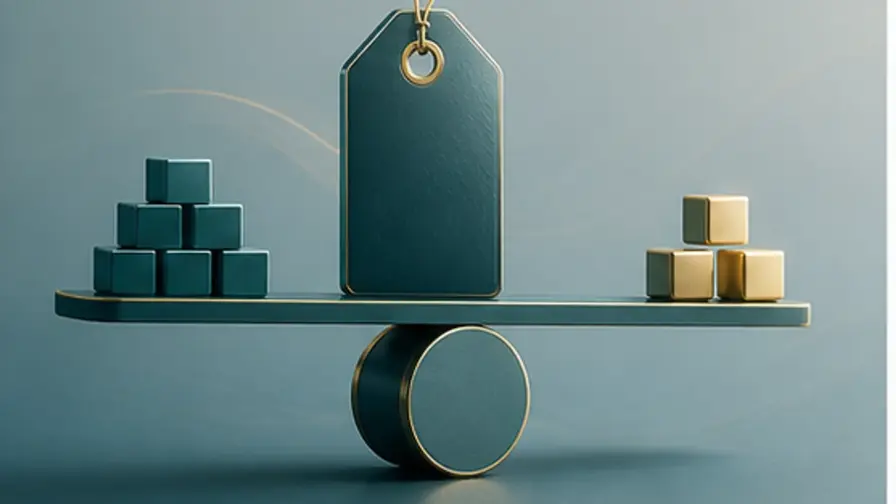
The discount promotion profit trap works like this: the knife looks like it’s cutting the price, but it’s really cutting the margin. Discount an RM40-cost, RM80-price item by 25% and the per-unit margin halves from RM40 to RM20 — volume must double just to break even, and that is the discount promotion profit trap. If revenue is up and the bank account isn’t, this is usually the blade.
You may know this picture: 10pm at closing, shutter down, a report showing revenue up 30% — and a bank account that barely moved, with rent, payroll and supplier invoices all the same size. The business isn’t lying to you; the revenue line is. First, let’s deal with the old saying that set this trap.
”Sell Cheap, Sell More” Is a Story the Market Sold You
We’ve all heard it since we were kids: “Thin margin, high volume — you’ll make it back on volume.” Sounds reasonable, right? Price it lower, get more customers, and the total still works out.
Wrong. That logic only holds under one condition: your volume actually rises enough to fill the hole the price cut dug. And “enough” is rarely a little — it’s usually a doubling. The problem is, the market doesn’t politely hand you twice the customers just because you dropped your price 25%.
Pin the blame where it belongs: that old saying comes from a different era, when goods were scarce and demand outran supply. Back then, if you were cheaper, people lined up. Today? Three shops next to you are running the same promotion. Cutting price just drags the whole market down — everyone slices their own flesh at once, and nobody ends up ahead.
The real problem isn’t that you “didn’t sell enough.” It’s that nobody ever put the after-cut margin math in front of you. So let’s put the knife on the table and look at it.
Margins too thin? Only 4 Ways to Raise Profit
Leave your WhatsApp and email — instant download.
The Truth About One Garment: Cut Price 25%, Lose Half Your Margin
Take the most ordinary item — a piece of clothing. This is the scene a retail, F&B, or apparel owner lives every single day.
The original math:
Cost (purchase price): RM40
Selling price: RM80
Gross margin per unit = Price − Cost = RM80 − RM40 = RM40
RM40 profit per garment. Not bad. Now you want to run a promotion to drive sales, so you discount it to RM60. The customer thinks “RM20 cheaper, what a deal.” And you think “I’m only giving up RM20.”
The math after the discount:
Cost (unchanged): RM40
Promo price: RM60
Gross margin per unit = RM60 − RM40 = RM20
See it? The price dropped by a quarter (from RM80 to RM60, down 25%), but your gross margin per unit fell from RM40 to RM20 — cut in half.
A 25% price cut, and your margin is halved. That’s the poison in low-margin-high-volume: the knife doesn’t cut the price, it cuts the already-thin slice of margin you were living on.
So How Many Must You Sell to Break Even? Volume Has to Double
Say before the promotion you sold 100 units a month. Total margin:
Margin before promo = 100 units × RM40 = RM4,000After the discount, each unit only carries RM20 of margin. To earn back the same RM4,000, you’d need to sell:
Units needed = RM4,000 ÷ RM20 = 200 units200 units. Volume has to climb from 100 to 200 just to break even — not to earn more, just to stand still. And that’s before counting the extra labour, packaging, utilities, and returns that come with selling twice as much.
The Brutal Arithmetic
Cut price 25%, and your volume must double (+100%) just to protect the profit you already had. If you only sell 30% or 50% more, you’ll look busy and actually finish worse than if you’d never run the promotion. A whole month of work — done for the market, not for you.
Ask yourself: did your last promotion actually double your volume? Almost certainly not. Which means that promotion was underwater from day one — the rising revenue line just hid it from you.
Side note: to find out whether your own last promotion actually made or lost money, start with the free AI profit diagnosis — a real consultant, 30-45 minutes, no hard selling.
The Smarter Play: Don’t Cut Price, Add Cost to Add Value
So does that mean no promotions, no perks for the customer? Of course not. Owners who really understand the game don’t cut their own flesh — they add to it.
The move is “add cost to capture volume”: don’t lower the price, spend a little to add value, so the customer wants it more and buys more.
Same garment, different play:
Price: held at RM80 (not a cent off)
Add a RM20-cost gift / pairing / upgrade (a scarf, premium packaging, one free alteration)
New cost = RM40 + RM20 = RM60
Gross margin per unit = RM80 − RM60 = RM20
Wait — that’s also RM20 of margin, same as the discount?
Not the same. The difference is enormous. It comes down to three things:
- The customer perceives more value: A gift that costs you RM20 might feel like RM40 or RM50 to the customer. A RM20 discount saves them exactly RM20 — no amplification.
- You never broke your price: The price is still RM80. When the promotion ends, the price snaps back. Once a discount goes out, the customer remembers RM60 — and forever after RM80 feels expensive. One promotion, and the whole pricing floor is smashed.
- The gift or upgrade is a cost you control: That scarf might cost you RM12 in bulk but feel like RM40 to the customer. You used RM12 to pull RM40 of appeal. A discount throws away real money — not a cent saved.
In plain terms: a discount takes money out of your pocket and hands it to the customer; adding value spends a little to make the customer feel they got a steal, while your price line never retreats an inch. Same margin on paper — one leaves you wounded, one leaves you whole.
The logic underneath this is what we always tell owners: profit reverse-engineering. First lock in how much profit each product must protect (your breakeven red line), then work backwards to decide how you can give back or add value — instead of slapping on a discount and discovering after the fact that you cut into the bone. To build this costing discipline into your business systematically, see our strategic profit budgeting service.
Three Things You Can Do This Week
No need to wait for the next big sale — start this week:
Action Checklist
- Calculate the true margin on each hero product: Price minus real cost (including freight, packaging, platform commissions). Most owners have never done this step properly.
- Re-run the math on your last promotion: Using the formula above, see how much margin was left after the cut, how many times volume had to multiply to break even, and compare that to what you actually sold. You’ll get a shock.
- Make your next campaign “add value, not cut price”: Stop discounting. Design a cost-controlled gift, bundle, or upgrade that feels like a steal — and hold the price firm.
One more warning: don’t let the revenue number lead you around by the nose. High revenue does not equal profit — we wrote a whole piece on exactly this. Plenty of owners hit record top-line numbers year after year while their bank account gets tighter, precisely because they watch the top line and ignore the bottom. Read Revenue vs Profit: Why the Busier You Get, the Less Cash You Have.
FAQ
Why doesn’t selling cheap to sell more actually make money?
Low-margin-high-volume fails because a price cut slices your gross margin, not your price. Example: an item costing RM40 and selling at RM80 carries RM40 margin per unit; drop the price to RM60 and margin falls to RM20 — cut in half. To earn back the same total profit, volume must double (from 100 to 200 units). But the market rarely hands you twice the customers for a 25% discount, so the net result is selling more while earning less.
If I cut price 25%, how much must volume rise to break even?
It depends on your margin. With a RM40 cost and RM80 price (50% margin), a 25% cut to RM60 drops per-unit margin from RM40 to RM20, so volume must double (+100%) just to break even. The thinner your margin, the more extreme the required volume jump. A simple rule: whenever the discounted unit margin falls below half the original, your volume has to more than double — a near-impossible task.
What does “add cost to capture volume” look like in practice?
It means holding the price and spending a little controlled cost to add value. For example, keep the price at RM80 and add a gift or upgrade that costs you RM20 in purchase price but feels worth RM40 to the customer (a scarf, gift packaging, a free alteration). Three benefits: the perceived value is amplified; your pricing is never broken, so it snaps back after the campaign; and you can drive the gift cost down in bulk, using small money to create large appeal. Same margin as a discount — but adding value protects your price line, while discounting simply throws money away.
Stop Numbing Yourself With Discounts
Discounting is the easiest move to make — and the most addictive. Press the button, someone buys, it feels good. But every press cuts your flesh and smashes your price. The owners who build a business that grows and lasts count how much profit is left on each transaction, not how many units went out the door today.
If you want to install this “calculate first, then give back” discipline into your pricing and budgeting systematically, take a look at our Budget Management (3+1)-Day Program, or simply book a strategy call and we’ll work out your breakeven red line together.
Worth adding: if you’d rather these numbers appeared on your phone every morning without waiting for your accountant, that’s what the AI Account Implementation Workshop teaches.
Reading Is Free. So Is Seeing Your Own Numbers.
You've just read the theory — now apply it to your own company. Use the AI ROI calculator, then let MMC's licensed team take a free look at where your revenue, profit and cash are leaking. A real consultant, no hard sell — and the 30-45 minutes could give you back ten hours a week.